
A grocery store can have a busy day and still lose money because of poor inventory management.
A product may be selling quickly, but nobody notices that the stock is almost finished. Another product may sit on the shelf for months and eventually expire. An online customer may place an order for something that was already sold in the shop. Staff then have to call the customer, find a replacement and adjust the order.
None of these problems sounds huge on its own. But when they happen regularly, they take up staff time, increase wastage and can affect customer trust.
This becomes more noticeable when a grocery store sells through both its physical shop and an online store. The same inventory is being used for two sales channels, so knowing what is actually available becomes much more important.
The good news is that inventory management does not have to be complicated. A few practical changes can make it easier to control stock and avoid many common problems.
A product may be selling quickly, but nobody notices that the stock is almost finished. Another product may sit on the shelf for months and eventually expire. An online customer may place an order for something that was already sold in the shop. Staff then have to call the customer, find a replacement and adjust the order.
None of these problems sounds huge on its own. But when they happen regularly, they take up staff time, increase wastage and can affect customer trust.
This becomes more noticeable when a grocery store sells through both its physical shop and an online store. The same inventory is being used for two sales channels, so knowing what is actually available becomes much more important.
The good news is that inventory management does not have to be complicated. A few practical changes can make it easier to control stock and avoid many common problems.
- The Stock You See Is Not Always the Stock You Have
One of the biggest inventory problems in a grocery store is the difference between recorded stock and actual stock.
Suppose your system says that you have 15 packets of a particular product. During the day, five are sold at the counter. Two more are damaged and removed from the shelf. An online customer then orders three packets.
On paper, you may still think you have 15. In reality, only five are available.
This is why simply having an inventory list is not enough. Stock needs to be updated as products are sold, damaged, returned or removed.
When the numbers are accurate, your staff can prepare online orders with more confidence and customers are less likely to hear that an item they ordered is suddenly unavailable.
- Online Orders Change the Way You Look at Stock
A physical customer can see that a product is not on the shelf. An online customer cannot.
When a product appears on your website, the customer assumes it is available to purchase. If the order is accepted and the product later turns out to be out of stock, the customer may feel that the store's online service is unreliable.
This is especially frustrating when it happens with everyday products.
Keeping online stock reasonably accurate helps prevent this situation. It also reduces the number of calls your staff need to make about missing products.
Instead of spending time fixing avoidable stock problems, they can focus on preparing and delivering orders.
- Not Every Product Should Be Managed in the Same Way
A common mistake is treating every product in the store equally.
Your best-selling products deserve more attention than products that sell once in a while.
For example, a grocery store may sell hundreds of products, but perhaps 30 or 40 items account for a large share of regular orders. If those products frequently go out of stock, the store can lose sales even though the rest of the shelves are full.
Look at your sales and identify these high-demand items.
Checking them more frequently and keeping suitable reorder levels can help you avoid unnecessary stockouts.
At the other end, slow-moving products need a different approach. Buying too much of something that barely sells can leave money sitting on the shelf.
Understanding this difference helps you decide where your money should go when purchasing new stock.
- Old Stock Can Quietly Become a Loss
There is another problem that is easy to overlook: products that are not selling.
A product sitting on a shelf may look harmless because it is still part of your inventory. But if it does not sell, the money spent on buying it is not coming back into the business.
For products with expiry dates, the problem becomes more serious.
A simple way to deal with this is to regularly identify products that have been sitting for too long. Depending on the product, you might promote it, include it in a bundle or reduce future purchases.
This can help free up storage space and reduce the amount of money tied up in stock that does not move.
- Expiry Management Is About More Than Checking Dates
Checking expiry dates once in a while is not enough for a busy grocery store.
When new stock arrives, it is easy for older stock to get pushed behind it. Staff may then pick the newer products first while older ones remain untouched.
A simple stock rotation system can prevent this.
Keep older products easier to access and make expiry checks part of the regular store routine. This gives those products a better chance of being sold before they expire.
For the business, the benefit is simple: less wastage and fewer products that have to be written off.
What Happens When an Online Product Is Unavailable?
Stockouts will happen. Even well-managed stores cannot keep every product available all the time.
The problem is what happens after the stockout.
If a customer orders a particular brand and your team discovers that it is unavailable, someone needs to decide what to do. Should the customer receive another brand? Should the item be removed from the order? Should the customer be contacted first?
Having a simple rule for these situations makes life easier for everyone.
For products where the brand or size matters, contacting the customer before making a replacement may be the better option. For less important items, you may have another process.
The important part is consistency. Staff should not have to figure out a new solution every time an item is missing.
- Better Inventory Can Also Improve Purchasing
Inventory management is not only about knowing what is on the shelf today. It can also help you decide what to buy tomorrow.
Your sales history can show which products sell consistently, which ones have seasonal demand and which products are not worth keeping in large quantities.
For example, if a product usually sells 50 units a month, buying 200 units may not make sense unless you expect demand to increase.
On the other hand, if a popular product regularly sells out before the next delivery from your supplier, increasing the reorder quantity could prevent lost sales.
Using actual sales patterns makes purchasing decisions less dependent on guesswork.
Your Staff Should Not Have to Solve the Same Stock Problem Every Day
If staff are constantly checking shelves, calling customers about missing items or correcting online orders, the problem may not be the employees. It may be the process.
A clear inventory workflow can remove many repetitive tasks.
For example, when an online order arrives, staff can check availability before picking the products. Once the products are picked, the stock quantity can be updated as part of the same process.
This creates a more predictable routine and reduces the chances of the same mistake happening again.
It also means your staff can spend less time fixing problems and more time serving customers.
Where an Online Store Can Help
When online orders are small in number, some grocery stores manage stock manually. But once orders become regular, keeping product information and availability updated can become difficult.
This is where an online-store platform can become useful.
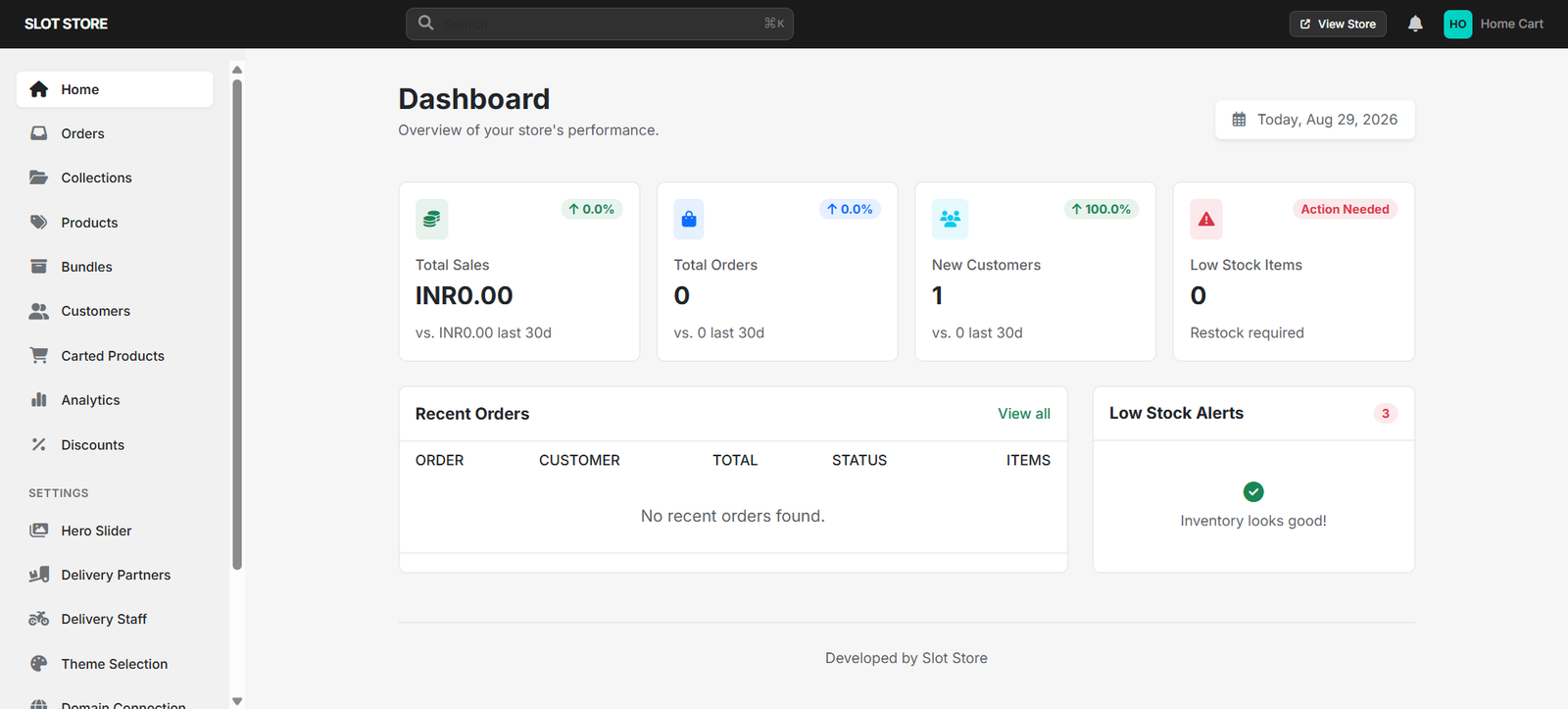
A solution such as Slot Store can be explored by grocery businesses that want to bring their online selling process into a more organised system. Rather than managing online orders separately from the rest of the business, a suitable platform can help make product and order management easier to handle.
Of course, the right solution depends on the store. The goal should always be to reduce unnecessary manual work rather than add another complicated task for the staff.
- The Real Benefit of Getting Inventory Right
Good inventory management does not simply give you a cleaner stock list.
It can help you:
- Reduce products being shown online when they are unavailable
- Avoid unnecessary purchases
- Reduce losses from expired products
- Keep popular items available
- Prepare online orders more accurately
- Spend less staff time correcting stock problems
- Make better purchasing decisions
- Give customers a more reliable experience
For a grocery business, these improvements directly affect everyday operations.
Customers may never know how your inventory is managed behind the scenes, but they will notice when their orders are accurate, products are available and deliveries arrive as expected.
Conclusion
Managing inventory becomes a different challenge once your grocery store starts selling both online and offline. You are no longer tracking only what leaves the physical shelf. You also need to consider online orders, stock updates, product availability, expiry dates and customer expectations.
You do not need a complicated system to get started.
Pay attention to the products that sell quickly, keep slow-moving stock under control, rotate products based on expiry dates and make sure your online availability reflects what you actually have.
As the number of online orders grows, you can introduce tools that reduce manual work and make the process easier for your team.
In the end, better inventory management means fewer avoidable problems, less wastage and a smoother experience for both your staff and customers.
One of the biggest inventory problems in a grocery store is the difference between recorded stock and actual stock.
Suppose your system says that you have 15 packets of a particular product. During the day, five are sold at the counter. Two more are damaged and removed from the shelf. An online customer then orders three packets.
On paper, you may still think you have 15. In reality, only five are available.
This is why simply having an inventory list is not enough. Stock needs to be updated as products are sold, damaged, returned or removed.
When the numbers are accurate, your staff can prepare online orders with more confidence and customers are less likely to hear that an item they ordered is suddenly unavailable.
- Online Orders Change the Way You Look at Stock
A physical customer can see that a product is not on the shelf. An online customer cannot.
When a product appears on your website, the customer assumes it is available to purchase. If the order is accepted and the product later turns out to be out of stock, the customer may feel that the store's online service is unreliable.
This is especially frustrating when it happens with everyday products.
Keeping online stock reasonably accurate helps prevent this situation. It also reduces the number of calls your staff need to make about missing products.
Instead of spending time fixing avoidable stock problems, they can focus on preparing and delivering orders.
- Not Every Product Should Be Managed in the Same Way
A common mistake is treating every product in the store equally.
Your best-selling products deserve more attention than products that sell once in a while.
For example, a grocery store may sell hundreds of products, but perhaps 30 or 40 items account for a large share of regular orders. If those products frequently go out of stock, the store can lose sales even though the rest of the shelves are full.
Look at your sales and identify these high-demand items.
Checking them more frequently and keeping suitable reorder levels can help you avoid unnecessary stockouts.
At the other end, slow-moving products need a different approach. Buying too much of something that barely sells can leave money sitting on the shelf.
Understanding this difference helps you decide where your money should go when purchasing new stock.
- Old Stock Can Quietly Become a Loss
There is another problem that is easy to overlook: products that are not selling.
A product sitting on a shelf may look harmless because it is still part of your inventory. But if it does not sell, the money spent on buying it is not coming back into the business.
For products with expiry dates, the problem becomes more serious.
A simple way to deal with this is to regularly identify products that have been sitting for too long. Depending on the product, you might promote it, include it in a bundle or reduce future purchases.
This can help free up storage space and reduce the amount of money tied up in stock that does not move.
- Expiry Management Is About More Than Checking Dates
Checking expiry dates once in a while is not enough for a busy grocery store.
When new stock arrives, it is easy for older stock to get pushed behind it. Staff may then pick the newer products first while older ones remain untouched.
A simple stock rotation system can prevent this.
Keep older products easier to access and make expiry checks part of the regular store routine. This gives those products a better chance of being sold before they expire.
For the business, the benefit is simple: less wastage and fewer products that have to be written off.
What Happens When an Online Product Is Unavailable?
Stockouts will happen. Even well-managed stores cannot keep every product available all the time.
The problem is what happens after the stockout.
If a customer orders a particular brand and your team discovers that it is unavailable, someone needs to decide what to do. Should the customer receive another brand? Should the item be removed from the order? Should the customer be contacted first?
Having a simple rule for these situations makes life easier for everyone.
For products where the brand or size matters, contacting the customer before making a replacement may be the better option. For less important items, you may have another process.
The important part is consistency. Staff should not have to figure out a new solution every time an item is missing.
- Better Inventory Can Also Improve Purchasing
Inventory management is not only about knowing what is on the shelf today. It can also help you decide what to buy tomorrow.
Your sales history can show which products sell consistently, which ones have seasonal demand and which products are not worth keeping in large quantities.
For example, if a product usually sells 50 units a month, buying 200 units may not make sense unless you expect demand to increase.
On the other hand, if a popular product regularly sells out before the next delivery from your supplier, increasing the reorder quantity could prevent lost sales.
Using actual sales patterns makes purchasing decisions less dependent on guesswork.
Your Staff Should Not Have to Solve the Same Stock Problem Every Day
If staff are constantly checking shelves, calling customers about missing items or correcting online orders, the problem may not be the employees. It may be the process.
A clear inventory workflow can remove many repetitive tasks.
For example, when an online order arrives, staff can check availability before picking the products. Once the products are picked, the stock quantity can be updated as part of the same process.
This creates a more predictable routine and reduces the chances of the same mistake happening again.
It also means your staff can spend less time fixing problems and more time serving customers.
Where an Online Store Can Help
When online orders are small in number, some grocery stores manage stock manually. But once orders become regular, keeping product information and availability updated can become difficult.
This is where an online-store platform can become useful.
A solution such as Slot Store can be explored by grocery businesses that want to bring their online selling process into a more organised system. Rather than managing online orders separately from the rest of the business, a suitable platform can help make product and order management easier to handle.
Of course, the right solution depends on the store. The goal should always be to reduce unnecessary manual work rather than add another complicated task for the staff.
- The Real Benefit of Getting Inventory Right
Good inventory management does not simply give you a cleaner stock list.
It can help you:
- Reduce products being shown online when they are unavailable
- Avoid unnecessary purchases
- Reduce losses from expired products
- Keep popular items available
- Prepare online orders more accurately
- Spend less staff time correcting stock problems
- Make better purchasing decisions
- Give customers a more reliable experience
For a grocery business, these improvements directly affect everyday operations.
Customers may never know how your inventory is managed behind the scenes, but they will notice when their orders are accurate, products are available and deliveries arrive as expected.
Conclusion
Managing inventory becomes a different challenge once your grocery store starts selling both online and offline. You are no longer tracking only what leaves the physical shelf. You also need to consider online orders, stock updates, product availability, expiry dates and customer expectations.
You do not need a complicated system to get started.
Pay attention to the products that sell quickly, keep slow-moving stock under control, rotate products based on expiry dates and make sure your online availability reflects what you actually have.
As the number of online orders grows, you can introduce tools that reduce manual work and make the process easier for your team.
In the end, better inventory management means fewer avoidable problems, less wastage and a smoother experience for both your staff and customers.