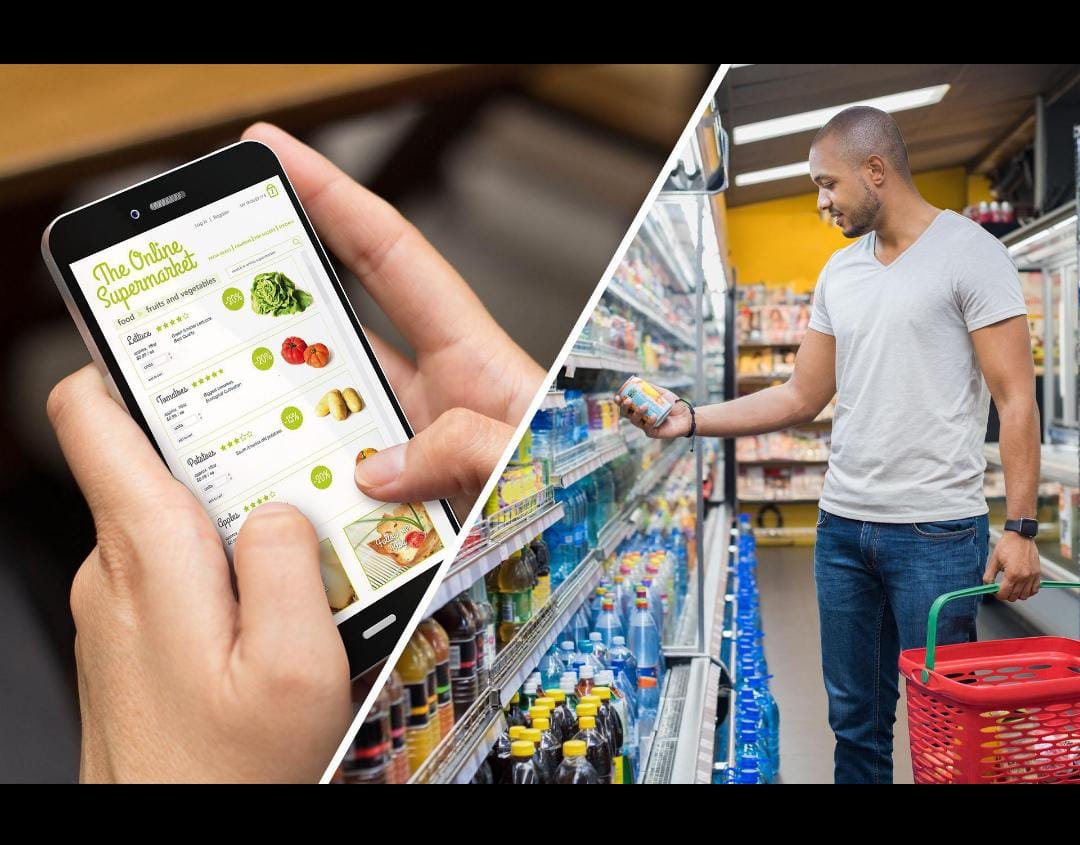
A grocery business does not have to follow the same selling model as every other store. Some businesses do well because customers enjoy visiting the shop, while others see an opportunity in allowing people to order groceries from home.
For a store owner, the decision is not simply about choosing between an online store and a physical store. Each model works differently and brings its own benefits and responsibilities.
A physical shop can help you build strong local relationships, while online selling can make shopping more convenient and expand the way customers reach your business. In some cases, using both can make more sense than depending on just one.
Before making a change, it helps to understand what each model can actually offer your grocery business.
For a store owner, the decision is not simply about choosing between an online store and a physical store. Each model works differently and brings its own benefits and responsibilities.
A physical shop can help you build strong local relationships, while online selling can make shopping more convenient and expand the way customers reach your business. In some cases, using both can make more sense than depending on just one.
Before making a change, it helps to understand what each model can actually offer your grocery business.
- What Makes a Physical Grocery Store a Strong Option?
A physical grocery store gives customers something very familiar: the ability to see and choose their products themselves.
Customers can compare different brands, check packaging, ask questions and make decisions with help from the store staff. This can be particularly important for fresh produce and other products where customers like to inspect the item before buying.
There is also a personal connection.
A regular customer may know the shop owner, recognise the staff and trust the recommendations they receive. Over time, that familiarity can become one of the reasons they continue choosing the same store.
A physical store also allows customers to get their purchases immediately. There is no delivery waiting time, and customers do not have to pay a delivery fee.
For businesses located in busy residential areas, these advantages can make a physical store highly valuable.
- Where Does a Physical Store Have Limitations?
The biggest limitation is accessibility.
Customers have to travel to the store to make a purchase. That may be easy for someone who lives nearby, but not everyone has the same amount of time or flexibility.
A working customer may prefer to order after reaching home. Someone caring for children may not want to make another trip just to buy a few items. Elderly customers may also find home delivery more convenient.
This does not mean they dislike your store.
The issue may simply be that visiting the shop is not convenient every time they need something.
A physical store also depends heavily on people coming through the door. If customer traffic is limited during certain periods, sales can be affected even when your products and service are good.
- What Does an Online Grocery Store Do Differently?
Online selling changes the way customers reach your business.
Instead of travelling to the shop, customers can browse your products and place an order from wherever they are. This is useful for people who value convenience or already know which products they want.
Online shopping can be particularly helpful for routine purchases.
For example, a customer who regularly buys rice, cooking oil, detergent and personal care products may prefer ordering them from home rather than spending time visiting the store each time.
For the business, this creates a different opportunity. You are no longer relying entirely on customers walking into the shop.
However, online selling is not simply a digital version of a physical store. It comes with a different set of requirements.
- What Are the Challenges of Online Grocery Selling?
Online grocery orders need to be handled carefully from the moment the customer places the order.
Someone has to find the products, check quantities, pack them and arrange delivery. If a product is unavailable, the customer may need to be contacted about a replacement.
Delivery is another important factor. The business needs to decide how far it can deliver and whether the delivery cost makes sense for the order.
There can also be additional expenses related to packaging, delivery and managing the online ordering system.
So, online selling can create new opportunities, but it also requires the business to organise its operations properly.
- Which Model Gives You Better Customer Reach?
A physical store mainly reaches customers who are willing and able to visit the location.
That can work very well for a local grocery business with a convenient location and a strong neighbourhood customer base.
An online store can reach customers within your delivery area without requiring them to travel to the shop.
This does not necessarily mean online selling gives you unlimited reach. Delivery distance, time and cost still matter.
But it does give customers another way to access your business.
For a store that already has a good local reputation, this can be useful because the business does not have to build trust with customers from the beginning.
- Which Option Is More Convenient for Customers?
Convenience depends on the type of shopping.
A customer who wants to choose fresh vegetables personally may prefer visiting the store.
Someone buying regular household products may find online ordering easier.
Another customer may use both. They might visit the store for their weekly shopping and order heavy items online when they do not want to carry them home.
This is why it can be difficult to say that one model is always better.
Different customers have different reasons for shopping.
- Can a Grocery Business Benefit From Using Both?
Yes, and this is where the two models can work particularly well together.
Your physical store can remain the main place where customers visit, interact with staff and choose products. Your online store can provide an alternative for customers who cannot or do not want to visit.
For example, imagine a local supermarket with customers living within five kilometres.
One customer may visit every weekend.
Another may place an online order during the week because of work.
A third customer may order heavier household products online but visit the shop when buying fresh items.
All three customers can continue buying from the same business because they are given different ways to shop.
This can help a grocery business serve customer preferences without completely changing the existing store.
- What Should a Small Grocery Business Consider Before Choosing?
Instead of copying another business, look at your own situation.
Ask yourself:
- Do customers regularly ask for home delivery?
- How many customers live within a practical delivery distance?
- Does your store already have strong walk-in traffic?
- Can your staff handle online orders?
- Can you deliver orders without making the service too expensive?
- Which products are customers most likely to order online?
The answers can tell you whether online selling is likely to solve a real problem.
If customers rarely ask for delivery and most people prefer visiting the store, there may be little reason to make a major change.
If customers frequently ask for online ordering or delivery, adding an online channel may be worth exploring.
- When Can Combining Both Be the Better Choice?
For an established grocery store, using both channels can reduce the pressure of choosing one over the other.
You do not have to stop serving walk-in customers just because you start accepting online orders.
Instead, you can keep the strengths of your physical store while adding convenience for customers who want to shop remotely.
This approach can also help you test online demand gradually.
You could begin by serving nearby customers and a limited product range. Once you understand the order volume, delivery workload and customer preferences, you can decide whether expanding makes sense.
That gives you room to learn without taking on more operational work than your business can handle.
A physical grocery store gives customers something very familiar: the ability to see and choose their products themselves.
Customers can compare different brands, check packaging, ask questions and make decisions with help from the store staff. This can be particularly important for fresh produce and other products where customers like to inspect the item before buying.
There is also a personal connection.
A regular customer may know the shop owner, recognise the staff and trust the recommendations they receive. Over time, that familiarity can become one of the reasons they continue choosing the same store.
A physical store also allows customers to get their purchases immediately. There is no delivery waiting time, and customers do not have to pay a delivery fee.
For businesses located in busy residential areas, these advantages can make a physical store highly valuable.
- Where Does a Physical Store Have Limitations?
The biggest limitation is accessibility.
Customers have to travel to the store to make a purchase. That may be easy for someone who lives nearby, but not everyone has the same amount of time or flexibility.
A working customer may prefer to order after reaching home. Someone caring for children may not want to make another trip just to buy a few items. Elderly customers may also find home delivery more convenient.
This does not mean they dislike your store.
The issue may simply be that visiting the shop is not convenient every time they need something.
A physical store also depends heavily on people coming through the door. If customer traffic is limited during certain periods, sales can be affected even when your products and service are good.
- What Does an Online Grocery Store Do Differently?
Online selling changes the way customers reach your business.
Instead of travelling to the shop, customers can browse your products and place an order from wherever they are. This is useful for people who value convenience or already know which products they want.
Online shopping can be particularly helpful for routine purchases.
For example, a customer who regularly buys rice, cooking oil, detergent and personal care products may prefer ordering them from home rather than spending time visiting the store each time.
For the business, this creates a different opportunity. You are no longer relying entirely on customers walking into the shop.
However, online selling is not simply a digital version of a physical store. It comes with a different set of requirements.
- What Are the Challenges of Online Grocery Selling?
Online grocery orders need to be handled carefully from the moment the customer places the order.
Someone has to find the products, check quantities, pack them and arrange delivery. If a product is unavailable, the customer may need to be contacted about a replacement.
Delivery is another important factor. The business needs to decide how far it can deliver and whether the delivery cost makes sense for the order.
There can also be additional expenses related to packaging, delivery and managing the online ordering system.
So, online selling can create new opportunities, but it also requires the business to organise its operations properly.
- Which Model Gives You Better Customer Reach?
A physical store mainly reaches customers who are willing and able to visit the location.
That can work very well for a local grocery business with a convenient location and a strong neighbourhood customer base.
An online store can reach customers within your delivery area without requiring them to travel to the shop.
This does not necessarily mean online selling gives you unlimited reach. Delivery distance, time and cost still matter.
But it does give customers another way to access your business.
For a store that already has a good local reputation, this can be useful because the business does not have to build trust with customers from the beginning.
- Which Option Is More Convenient for Customers?
Convenience depends on the type of shopping.
A customer who wants to choose fresh vegetables personally may prefer visiting the store.
Someone buying regular household products may find online ordering easier.
Another customer may use both. They might visit the store for their weekly shopping and order heavy items online when they do not want to carry them home.
This is why it can be difficult to say that one model is always better.
Different customers have different reasons for shopping.
- Can a Grocery Business Benefit From Using Both?
Yes, and this is where the two models can work particularly well together.
Your physical store can remain the main place where customers visit, interact with staff and choose products. Your online store can provide an alternative for customers who cannot or do not want to visit.
For example, imagine a local supermarket with customers living within five kilometres.
One customer may visit every weekend.
Another may place an online order during the week because of work.
A third customer may order heavier household products online but visit the shop when buying fresh items.
All three customers can continue buying from the same business because they are given different ways to shop.
This can help a grocery business serve customer preferences without completely changing the existing store.
- What Should a Small Grocery Business Consider Before Choosing?
Instead of copying another business, look at your own situation.
Ask yourself:
- Do customers regularly ask for home delivery?
- How many customers live within a practical delivery distance?
- Does your store already have strong walk-in traffic?
- Can your staff handle online orders?
- Can you deliver orders without making the service too expensive?
- Which products are customers most likely to order online?
The answers can tell you whether online selling is likely to solve a real problem.
If customers rarely ask for delivery and most people prefer visiting the store, there may be little reason to make a major change.
If customers frequently ask for online ordering or delivery, adding an online channel may be worth exploring.
- When Can Combining Both Be the Better Choice?
For an established grocery store, using both channels can reduce the pressure of choosing one over the other.
You do not have to stop serving walk-in customers just because you start accepting online orders.
Instead, you can keep the strengths of your physical store while adding convenience for customers who want to shop remotely.
This approach can also help you test online demand gradually.
You could begin by serving nearby customers and a limited product range. Once you understand the order volume, delivery workload and customer preferences, you can decide whether expanding makes sense.
That gives you room to learn without taking on more operational work than your business can handle.
- Where Can Slot Store Fit Into This?
If you decide that online selling is useful for your business, you need a practical way to manage your online catalogue and orders.
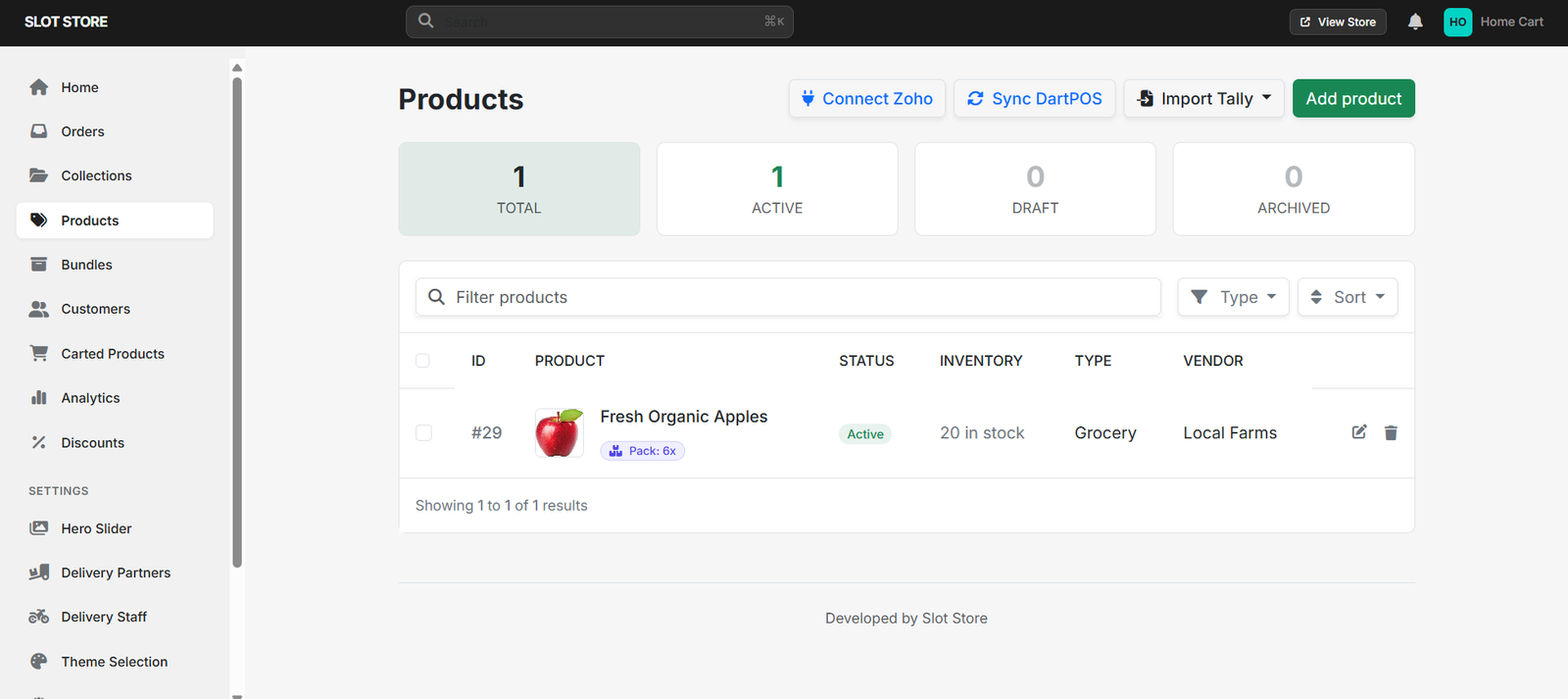
A grocery-focused platform such as Slot Store can be one option to evaluate when adding an online sales channel. Instead of choosing a platform simply because it has many features, consider whether it fits the way your store actually operates.
Your product range, customer requirements, order process and delivery model should all be considered before making a decision.
The right platform should make online selling easier for both the business and its customers.
So, Which One Should You Choose?
There is no universal answer.
A physical store may be the better focus when your business has strong local traffic, loyal customers and a location that is easy for people to reach.
An online store may be useful when your customers value home delivery, convenience and ordering from a distance.
Both together can make sense when you already have an established physical store but want to give customers another way to shop.
The decision should come from your customers and your business capacity, not simply from what competitors are doing.
Conclusion
Online grocery shopping does not have to mean the end of traditional grocery stores.
Physical stores still offer personal service, immediate shopping and a strong connection with local customers. Online stores offer convenience and another way for customers to buy without visiting the shop.
For many grocery businesses, these strengths can work side by side.
The important thing is to understand what your customers actually need. If visiting your store already works well for most people, continue building on that strength. If some customers need a more convenient option, online ordering can fill that gap.
Rather than replacing what already works, the right approach may be to add another option that makes your business easier to access.
FAQs
1. Is an online grocery store better than a physical store?
It depends on what your customers need. A physical store works well for customers who prefer personal service and choosing products themselves, while online ordering is useful for people who want to save time and receive groceries at home. Looking at your customer behaviour will help you decide which option gives your business the most value.
2. Can a small grocery store benefit from selling both online and offline?
Yes. Keeping both options allows you to serve customers according to their preferences. Regular shoppers can continue visiting your store, while busy customers can order from home. This can help you retain existing customers while creating another opportunity for sales.
3. Will selling groceries online increase my business costs?
It can add costs for packaging, delivery and order management. However, the value comes from whether those costs help you generate additional sales or retain customers. Starting with a manageable delivery area can help you understand whether the online channel is financially practical.
4. How can I know whether my customers want online ordering?
Pay attention to what customers are already asking for. If people frequently ask about home delivery, WhatsApp ordering or online product availability, there may be genuine demand. You can also start with a small online service and use the first few orders to understand customer interest.
5. Do I have to replace my physical store if I start selling online?
No. Online selling can simply work as another sales channel. Your physical store can continue providing the personal shopping experience, while online ordering helps customers who prefer the convenience of shopping from home.
- A Practical Way to Decide
Before choosing between online and offline selling, look at your current customers, sales pattern and delivery possibilities.
You do not need to make a complete change immediately. If online demand exists, start small, serve customers within an area you can manage and see how the new channel performs.
If it makes shopping easier for your customers and creates value for your business, you can gradually build it into your regular operations.
If you decide that online selling is useful for your business, you need a practical way to manage your online catalogue and orders.
A grocery-focused platform such as Slot Store can be one option to evaluate when adding an online sales channel. Instead of choosing a platform simply because it has many features, consider whether it fits the way your store actually operates.
Your product range, customer requirements, order process and delivery model should all be considered before making a decision.
The right platform should make online selling easier for both the business and its customers.
So, Which One Should You Choose?
There is no universal answer.
A physical store may be the better focus when your business has strong local traffic, loyal customers and a location that is easy for people to reach.
An online store may be useful when your customers value home delivery, convenience and ordering from a distance.
Both together can make sense when you already have an established physical store but want to give customers another way to shop.
The decision should come from your customers and your business capacity, not simply from what competitors are doing.
Conclusion
Online grocery shopping does not have to mean the end of traditional grocery stores.
Physical stores still offer personal service, immediate shopping and a strong connection with local customers. Online stores offer convenience and another way for customers to buy without visiting the shop.
For many grocery businesses, these strengths can work side by side.
The important thing is to understand what your customers actually need. If visiting your store already works well for most people, continue building on that strength. If some customers need a more convenient option, online ordering can fill that gap.
Rather than replacing what already works, the right approach may be to add another option that makes your business easier to access.
FAQs
1. Is an online grocery store better than a physical store?
It depends on what your customers need. A physical store works well for customers who prefer personal service and choosing products themselves, while online ordering is useful for people who want to save time and receive groceries at home. Looking at your customer behaviour will help you decide which option gives your business the most value.
2. Can a small grocery store benefit from selling both online and offline?
Yes. Keeping both options allows you to serve customers according to their preferences. Regular shoppers can continue visiting your store, while busy customers can order from home. This can help you retain existing customers while creating another opportunity for sales.
3. Will selling groceries online increase my business costs?
It can add costs for packaging, delivery and order management. However, the value comes from whether those costs help you generate additional sales or retain customers. Starting with a manageable delivery area can help you understand whether the online channel is financially practical.
4. How can I know whether my customers want online ordering?
Pay attention to what customers are already asking for. If people frequently ask about home delivery, WhatsApp ordering or online product availability, there may be genuine demand. You can also start with a small online service and use the first few orders to understand customer interest.
5. Do I have to replace my physical store if I start selling online?
No. Online selling can simply work as another sales channel. Your physical store can continue providing the personal shopping experience, while online ordering helps customers who prefer the convenience of shopping from home.
- A Practical Way to Decide
Before choosing between online and offline selling, look at your current customers, sales pattern and delivery possibilities.
You do not need to make a complete change immediately. If online demand exists, start small, serve customers within an area you can manage and see how the new channel performs.
If it makes shopping easier for your customers and creates value for your business, you can gradually build it into your regular operations.